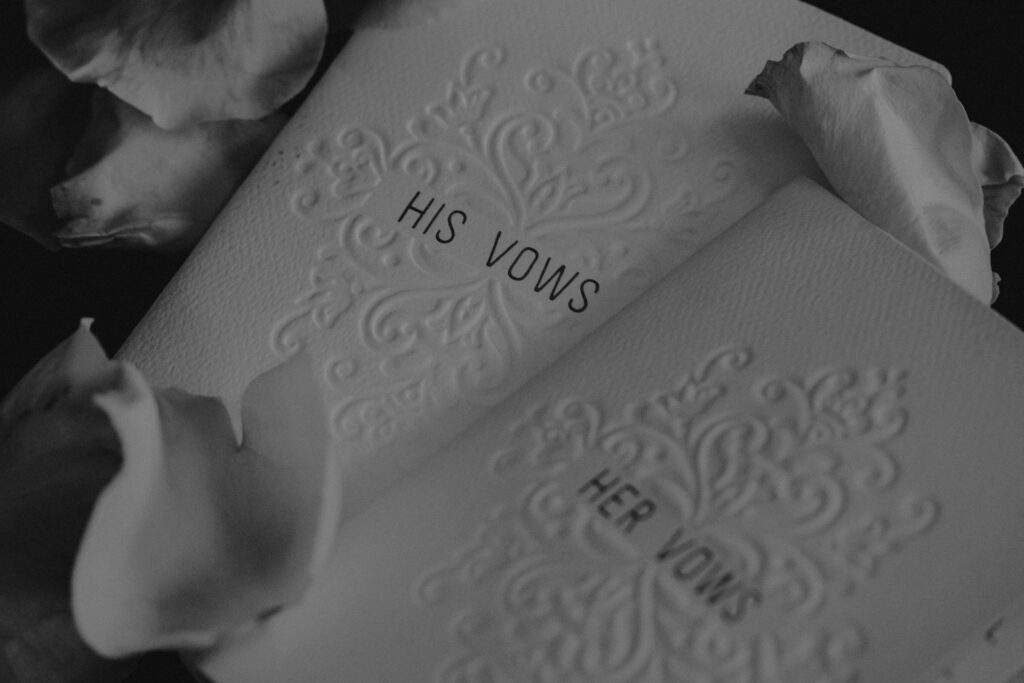
Traditional vows exist for a reason. They work, they’re familiar, and nobody has ever regretted using them. But if you want something that sounds like the two of you, here’s where to start.
Before you write a word
Read a handful of real examples first, not for the exact wording but to get a feel for structure and length. Then put them away. The best personal vows come from your own memories and language, not from borrowing someone else’s phrasing.
A simple structure that works
- How you felt when you met, or when you knew. One or two sentences, not the full story.
- What you promise. The actual commitments, specific to you as a couple rather than generic lines.
- A note about the future. What you’re looking forward to, or what kind of partner you intend to be.
Length and delivery
Sixty to ninety seconds is the sweet spot when read aloud, roughly 200 to 300 words. Longer than that and people in the back rows start losing focus. Practise reading them out loud at least twice before the day, ideally to someone else, so you know how they land and where you might get emotional.
What to avoid
Inside jokes that only three people will understand, anything that could embarrass a guest, and comparing your relationship to anyone else’s. Vows are personal, but they’re also being read in front of a room.
If you’re stuck
Write down five specific memories before you try to write a single vow line. Specific detail almost always beats a general statement of love, and it’s usually where the best lines come from anyway.
For more on the day itself, our wedding photography guide covers how to make sure this exact moment gets captured properly.
You don’t have to figure this out alone
The Big Day Bulletin exists to make this process feel less overwhelming and more enjoyable. Whether you’re at the very beginning like right now, or knee deep in seating plans and supplier emails, we’ve got guides, ideas, and honest advice for every stage. Browse the blog, bookmark what’s useful, and come back whenever you need it.
Found this helpful? Save it to Pinterest so you can find it again when you need it – or share it with a newly engaged friend who could do with a calm, sensible starting point.